
Mixing Machine Manufacturer
Industrial Mixing Machines for Different Production Requirements
Annovaa Industries Pvt. Ltd. caters to industrial machinery requirements for businesses seeking mixing machines for powder processing, granule blending, liquid preparation and other manufacturing operations. A Mixing Machine combines two or more materials to achieve the desired consistency, distribution or product formulation. The appropriate equipment depends on the physical properties of the ingredients, batch size, mixing speed and production environment. From small-batch preparation to large-scale industrial processing, different mixer designs serve different purposes. Businesses in Kolkata, West Bengal, Jharkhand, Odisha, Assam and Chhattisgarh can explore suitable mixing machine configurations for food processing, chemical manufacturing, agriculture, pharmaceuticals, plastics and other industrial sectors.
Explore Different Types of Mixing Machines
- Ribbon Blender Machine
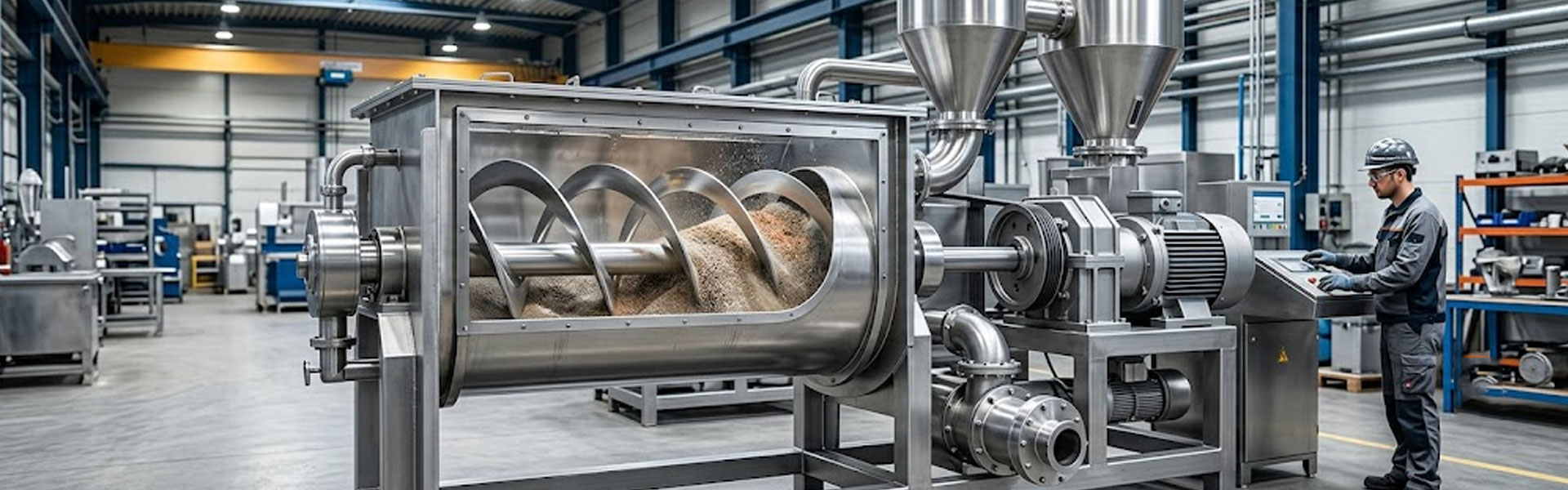
Designed primarily for blending dry powders and granules, a ribbon blender uses inner and outer helical ribbons to circulate materials within a horizontal trough. It is commonly used for spice mixtures, flour premixes, fertiliser ingredients and compatible industrial powders.
- Paddle Mixing Machine
Paddle mixers use rotating blades to move and combine materials. Depending on the design, they can handle powders, granules and selected bulk solids where controlled material movement is required.
- Vertical Mixing Machine
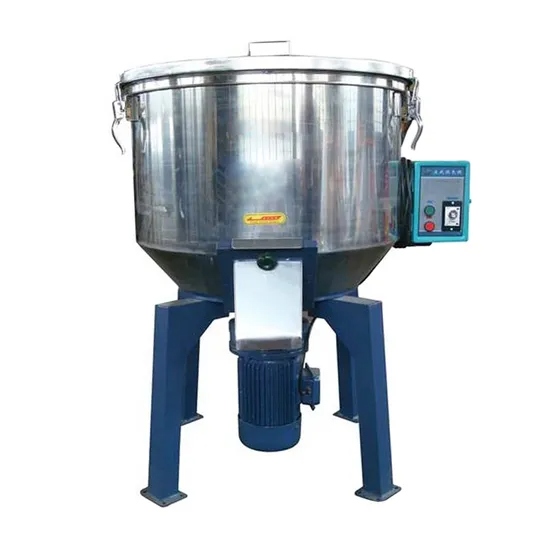
Vertical mixers move material through a vertically arranged mixing chamber. They can be considered for applications where floor space, batch volume and the characteristics of the ingredients influence equipment selection.
- High-Speed Mixer
High-speed mixers use rapidly rotating mixing elements to disperse or combine suitable ingredients. They are used in selected chemical, coating, pigment and formulation processes.
- Liquid Mixing Machine
Equipped with an agitator or other suitable mixing mechanism, liquid mixers help combine compatible liquids, dissolve ingredients or maintain suspension in industrial tanks.
- Double Cone Blender
This rotating vessel mixer is used for blending suitable dry powders and granules. Its tumbling action makes it useful for selected applications requiring gentle bulk-material mixing.
- Planetary Mixing Machine
Planetary mixers combine the rotation of mixing tools with movement around the vessel. Depending on the model, they can process viscous compounds, pastes and specialised formulations.
- Sigma Blade Mixer
Designed for intensive mixing and kneading, sigma blade mixers are commonly used for heavy pastes, rubber compounds, adhesives and other high-viscosity materials. The availability of specific mixer types should be confirmed with Annovaa Industries Pvt. Ltd. according to your application and required specifications.
How an Industrial Mixing Machine Works
The operating principle varies by mixer type, but the objective remains to distribute ingredients or process materials in a controlled manner.
- Ingredient Feeding: Raw materials are introduced into the vessel, trough or mixing chamber in the required proportions.
- Mechanical Mixing: Blades, ribbons, paddles, agitators or rotating vessels create the movement needed to combine the materials.
- Material Distribution: The mixing action reduces concentration differences and helps produce the required blend or formulation.
- Process Monitoring: Mixing time, speed, temperature and other relevant parameters are controlled according to the material and production method.
- Product Discharge: The processed material is transferred to the next stage, such as screening, storage, filling or packaging.
Manufacturing Process of Mixing Machines
Industrial mixing equipment requires careful design and fabrication to suit its operating load and material-handling conditions.
- Design and Capacity Planning: Engineers determine vessel dimensions, batch capacity, mixing mechanism and drive requirements based on the intended process.
- Metal Cutting and Fabrication: Selected sheets, plates and structural sections are cut, formed and welded to manufacture the chamber, vessel or supporting frame.
- Mixing Element Production: Blades, ribbons, paddles or agitators are manufactured according to the required geometry and operating clearances.
- Drive System Assembly: The motor, gearbox, shaft, couplings and bearings are fitted according to the design.
- Surface Finishing: Product-contact surfaces and external components receive the specified finish or protective treatment.
- Inspection and Testing: Relevant checks cover dimensions, weld quality, alignment, mechanical operation, guarding and, where applicable, mixing performance.
Construction Materials and Component Quality
The material selected for a mixing machine affects its service life, cleanliness, corrosion resistance and suitability for the intended ingredients.
Component | Common Material Options | Purpose |
Mixing vessel or trough | Mild steel, stainless steel | Contains ingredients during processing |
Mixing blades or ribbons | Mild steel, stainless steel or specified alloys | Produces the required mixing action |
Main shaft | Suitable-grade steel or stainless steel | Transmits rotational force |
Supporting frame | Fabricated mild steel or other specified metal | Supports the machine assembly |
Bearings | Industrial-grade bearing assemblies | Supports rotating shafts |
Seals and gaskets | Application-compatible materials | Helps prevent leakage and unwanted ingress |
Outer surface | Industrial coating or suitable finish | Provides protection against environmental exposure |
Electrical components | Components rated for the intended installation | Supports safe and controlled operation |
For food, pharmaceutical and chemical applications, material compatibility, cleaning requirements, surface finish and sealing arrangements should be assessed before selecting a machine.
Technical Specifications to Consider Before Buying
The specifications of a mixing machine depend on its design and intended application. The following parameters help businesses compare suitable equipment.
Parameter | Selection Details |
Machine Type | Ribbon, paddle, vertical, liquid, planetary, sigma blade or other design |
Mixing Capacity | Based on required batch size or continuous production rate |
Working Volume | Selected according to usable vessel capacity and recommended fill level |
Motor Power | Determined by load, viscosity, mixing mechanism and duty cycle |
Operating Speed | Selected according to the material and required mixing action |
Construction Material | Mild steel, stainless steel or application-specific material |
Mixing Mechanism | Ribbons, paddles, blades, agitators or rotating vessel |
Drive Arrangement | Direct drive, geared drive or other specified system |
Feeding Method | Manual, hopper-fed or integrated feeding arrangement |
Discharge Arrangement | Bottom valve, outlet chute or other suitable design |
Temperature Control | Optional jacket or other provision where the process requires it |
Control System | Manual controls or specified electrical automation |
Safety Provisions | Guards, emergency stop and appropriate interlocks where required |
Exact motor ratings, dimensions, batch capacity and production output must be confirmed through the technical datasheet for the selected machine.
Where Are Mixing Machines Used?
Mixing equipment is used across a wide range of manufacturing processes, with the required machine depending on whether the materials are dry, liquid, granular, viscous or paste-like.
- Food Processing: Spice blends, flour premixes, seasoning powders and selected food formulations.
- Chemical Manufacturing: Industrial powders, compatible liquid formulations, pigments and compounds.
- Pharmaceutical Production: Suitable ingredient blending under the required hygiene and process controls.
- Agriculture and Fertiliser: Blending selected fertiliser ingredients, soil additives and agricultural formulations.
- Plastic and Polymer Industries: Combining granules, powders, colourants and additives.
- Paint and Coating Production: Dispersing pigments and combining compatible formulation ingredients.
- Construction Materials: Mixing dry mortar ingredients, mineral powders and other construction compounds.
- Rubber and Adhesive Manufacturing: Kneading and processing selected high-viscosity compounds.
- Animal Feed Production: Blending feed ingredients and compatible nutritional premixes.
Advantages of Choosing the Correct Mixing Machine
- Consistent Product Formulation: A suitable mixing mechanism helps distribute ingredients according to the required blend quality.
- Higher Process Control: Defined mixing speed, duration and loading procedures help standardise production batches.
- Application-Specific Performance: Different machine designs accommodate a broad range of material properties and processing requirements.
- Production-Line Integration: Mixing machines can be incorporated into weighing, conveying, screening and packaging operations.
- Reduced Manual Handling: Mechanised mixing can reduce the need for manual material blending and improve workflow organisation.
- Flexible Capacity Planning: Selecting equipment around batch size and production targets helps align machinery with operational needs.
- Maintainable Equipment Design: Accessible components and appropriate cleaning provisions can simplify routine servicing when included in the machine design.
Why Choose Annovaa Industries Pvt. Ltd.?
Annovaa Industries Pvt. Ltd. caters to industrial machinery enquiries from businesses in Kolkata, West Bengal, Jharkhand, Odisha, Assam and Chhattisgarh. We recognise that selecting mixing equipment requires more than comparing machine size or motor power.
- Requirement-Based Selection: Explain your material type, production volume and desired mixing result.
- Multiple Mixing Technologies: Explore the machine category suited to powders, granules, liquids or viscous compounds.
- Technical Specification Guidance: Assess capacity, drive arrangement, construction material and discharge requirements.
- Industrial Application Focus: Identify relevant equipment options for manufacturing and processing operations.
- Project and Bulk Enquiries: Discuss machinery requirements for new facilities and production-line upgrades.
- Regional Business Coverage: Submit enquiries from industrial locations across eastern and central India.
For accurate equipment selection, provide the ingredients being processed, their physical characteristics, required batch size and expected production schedule.
Frequently Asked Questions About Mixing Machines
- Which mixing machine is suitable for dry powders?
Ribbon blenders, paddle mixers and double cone blenders are common options. The choice depends on particle size, density differences, required blend uniformity and production capacity.
- Which mixer should I use for thick paste or viscous material?
Planetary mixers and sigma blade mixers are used for selected high-viscosity materials. The suitable design depends on the material’s resistance to flow and processing requirements.
- Can one mixing machine handle different materials?
Some machines can process multiple compatible formulations, but cleaning requirements, cross-contamination risks, viscosity and material compatibility must be considered before switching products.
- What information is needed to choose a machine capacity?
Provide the batch weight, bulk density or viscosity, target output, mixing time and number of batches per shift. These details help establish the required working volume and drive capacity.
- Are stainless steel mixing machines available?
Stainless steel construction is commonly used where corrosion resistance or specific hygiene requirements are important. The suitable grade and surface finish depend on the application.
- How can I enquire about pricing from Annovaa Industries Pvt. Ltd.?
Share the required mixer type, capacity, material to be processed, construction preference and delivery location. These details help clarify the equipment requirement before a quotation is discussed.
Contact Annovaa Industries Pvt. Ltd. for Industrial Mixing Equipment
Looking for a suitable mixing machine for your manufacturing or processing unit? Contact Annovaa Industries Pvt. Ltd. to discuss your machinery requirements and identify an appropriate mixer configuration. We welcome industrial enquiries from Kolkata, West Bengal, Jharkhand, Odisha, Assam and Chhattisgarh. Whether you need powder blending, liquid mixing, granular material processing or intensive kneading, share your application details to discuss the available equipment options, specifications and bulk-order requirements. Annovaa Industries Pvt. Ltd. – Industrial Mixing Machine Solutions for Diverse Processing Needs.