
Ribbon Blender Machine Manufacturer
Understanding Ribbon Blender Machine Technology
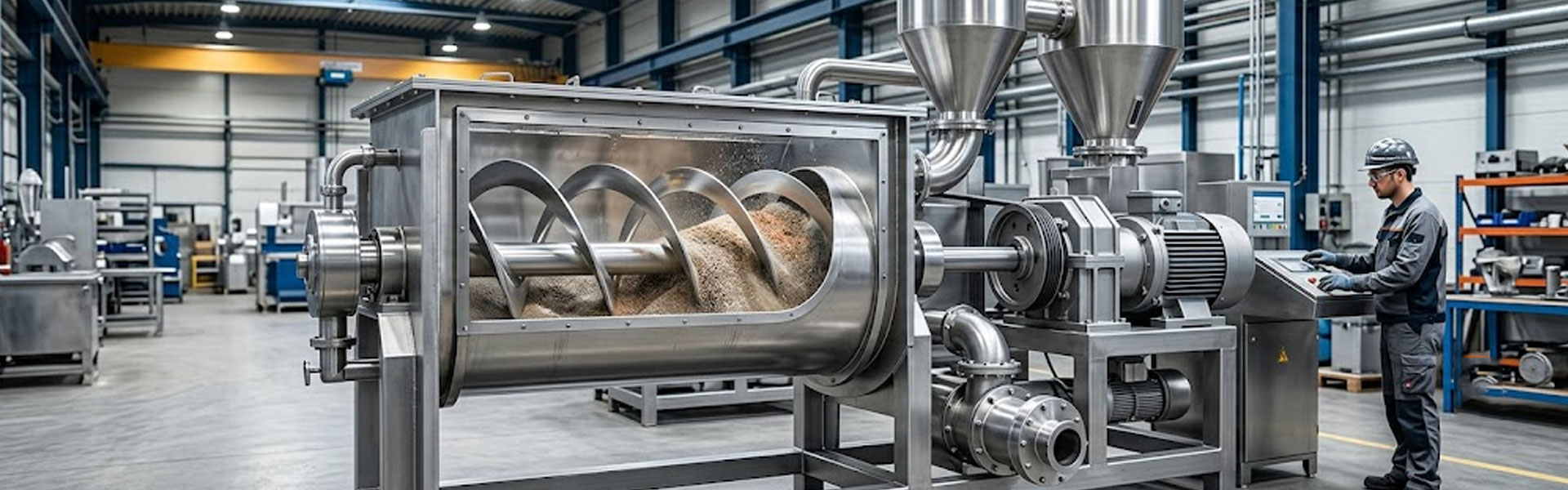
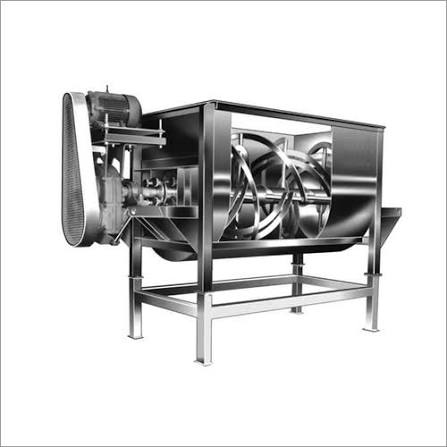
Annovaa Industries Pvt. Ltd. caters to industrial machinery requirements with Ribbon Blender Machine Solutions designed for mixing dry powders, granules and selected bulk materials. A Ribbon Blender is a horizontal mixing machine that uses specially arranged helical ribbons inside a U-shaped trough to move materials in different directions, helping achieve a uniform blend.
Industries involved in food processing, pharmaceuticals, chemicals, agriculture and powder manufacturing use ribbon blenders for batch mixing operations. Businesses in Kolkata, West Bengal, Jharkhand, Odisha, Assam and Chhattisgarh can explore machine configurations according to their production volume, material characteristics and mixing requirements.
How Does a Ribbon Blender Work?
A Ribbon Blender operates through a rotating shaft fitted with inner and outer helical ribbons. These ribbons create a combination of axial and radial material movement, circulating the contents throughout the mixing chamber.
- Material Loading: Raw powders or granules are introduced through the top opening or designated charging inlet.
- Ribbon Rotation: A motor and gearbox drive the central shaft, rotating the mixing ribbons.
- Material Circulation: The outer ribbon moves material in one direction while the inner ribbon promotes movement in the opposite direction.
- Homogeneous Mixing: Repeated circulation helps distribute ingredients throughout the batch.
- Product Discharge: The blended material is released through a bottom discharge valve or an application-specific outlet.
Mixing time depends on particle size, density, moisture, ingredient ratios, fill level and the required blend uniformity.
Important Design Features of a Ribbon Blender
- Horizontal Mixing Trough
- The trough accommodates the material and supports continuous circulation during the batch mixing cycle. Its capacity and geometry are selected according to production needs.
- Dual-Action Ribbon Assembly
- Inner and outer ribbons move material in opposing axial directions, helping reduce concentration differences within the batch.
- Motor and Gearbox Arrangement
- The drive system provides the torque required to rotate the loaded mixing shaft at the specified operating speed.
- Controlled Discharge System
- A suitable outlet arrangement allows the finished batch to be discharged into containers, hoppers or downstream processing equipment.
Manufacturing Process of a Ribbon Blender Machine
The production of a ribbon blender involves mechanical fabrication, component assembly and quality checks to ensure the equipment is suitable for its intended duty.
- Engineering and Design: The machine layout is developed according to batch capacity, powder characteristics, material compatibility and installation requirements.
- Trough Fabrication: Metal sheets are cut, bent and welded to form the mixing chamber, support structure and end plates.
- Ribbon and Shaft Production: The central shaft and helical ribbon components are manufactured to the required dimensions and assembled with suitable clearances.
- Drive Unit Installation: The motor, gearbox, coupling and supporting components are fitted to provide the required rotation and torque.
- Discharge and Cover Assembly: The outlet valve, inspection covers, charging openings and other specified accessories are installed.
- Finishing and Inspection: Weld quality, shaft alignment, component clearances, surface finish and drive operation are checked. Appropriate trial testing is carried out according to the machine specification.
Materials and Construction Options
Material selection is particularly important when processing fine powders, food ingredients, chemical compounds or abrasive substances.
Component | Common Material Options | Purpose |
Mixing trough | Mild steel or stainless steel | Structural strength and material containment |
Mixing ribbons | Mild steel or stainless steel | Movement and circulation of ingredients |
Main shaft | Suitable-grade steel or stainless steel | Transfers rotational torque |
Contact surfaces | Application-compatible stainless steel or other specified material | Product compatibility and cleaning requirements |
Outer frame | Fabricated mild steel | Supports the machine assembly |
Bearings | Industrial-grade bearing assemblies | Supports shaft rotation |
Seals and gaskets | Compatible industrial sealing materials | Helps limit leakage and contamination |
Surface finish | Painted exterior or specified polished finish | Corrosion protection or hygiene requirements |
For food, pharmaceutical or corrosive applications, the contact material, surface finish, cleaning method and sealing arrangement should be confirmed against the applicable process and hygiene requirements.
Technical Parameters for Selecting a Ribbon Blender
The correct machine configuration depends on the product being mixed and the required output. The following specifications should be discussed before ordering.
Parameter | Selection Consideration |
Machine Type | Horizontal ribbon blender |
Batch Capacity | Selected according to required production volume |
Working Volume | Based on usable mixing volume and recommended fill level |
Mixing Mechanism | Inner and outer helical ribbon assembly |
Motor Rating | Determined by batch load, material characteristics and design |
Operating Speed | Selected to achieve effective circulation without unsuitable material handling |
Construction Material | Mild steel, stainless steel or another specified material |
Charging Arrangement | Top cover, charging port or customised feeding arrangement |
Discharge Mechanism | Bottom valve or other suitable outlet |
Drive System | Motor with suitable gearbox and transmission arrangement |
Cleaning Access | Inspection covers and access provisions according to application |
Safety Features | Appropriate guards, covers, emergency stopping and interlocks where required |
Actual dimensions, batch capacity, motor power, operating speed and production output vary by model. Obtain the machine-specific technical datasheet before finalising an order.
Industrial Sectors That Use Ribbon Blenders
Ribbon Blenders are used wherever dry ingredients need to be distributed evenly within a batch. Their suitability depends on the material’s flow properties and the required mixing result.
- Food Manufacturing: Blending spice powders, flour premixes, seasoning ingredients and dry food formulations.
- Chemical Processing: Mixing compatible chemical powders and industrial compounds.
- Pharmaceutical Production: Blending suitable dry ingredients under the required process and hygiene controls.
- Agriculture and Fertiliser: Mixing selected fertiliser formulations, soil additives and agricultural powders.
- Plastic and Polymer Processing: Blending polymer granules, dry additives and compatible powder mixtures.
- Building Materials: Mixing dry mortar ingredients, mineral powders and other compatible construction materials.
- Feed Manufacturing: Blending dry feed ingredients and nutritional premixes.
- Powder Processing Units: Combining multiple ingredients before packaging or subsequent manufacturing operations.
Production Advantages of Using a Ribbon Blender
- Improved Ingredient Distribution: The counter-moving ribbon arrangement circulates material through the trough to support consistent batch mixing.
- Suitable for Different Powder Formulations: Machine configuration can be selected for many free-flowing powders and granules.
- Batch Processing Convenience: Operators can load ingredients, run a defined mixing cycle and discharge the completed batch.
- Integration with Production Lines: The machine can be incorporated into a workflow involving weighing, feeding, screening, conveying and packaging.
- Adaptable Construction: Different capacities, contact materials, covers and discharge arrangements can be considered according to the application.
- Repeatable Operating Procedures: Defined loading quantities, mixing times and operating conditions can help maintain consistency between batches.
Why Choose Annovaa Industries Pvt. Ltd. for Ribbon Blender Requirements?
Annovaa Industries Pvt. Ltd. serves industrial machinery enquiries from businesses across Kolkata, West Bengal, Jharkhand, Odisha, Assam and Chhattisgarh. We understand that powder-processing equipment must be evaluated according to the material, production target and factory operating conditions.
- Requirement-Oriented Guidance: Discuss the type of powder, batch size and desired mixing result.
- Capacity Considerations: Identify the working volume needed for your production schedule.
- Material Compatibility: Evaluate suitable construction materials for the intended application.
- Process Integration: Consider charging, discharge and connections with existing production equipment.
- Industrial Project Enquiries: Discuss machinery requirements for new installations and production-line expansion.
- Bulk Purchase Discussions: Share your quantity, delivery location and technical requirements for a quotation enquiry.
If you are searching for a ribbon blender machine manufacturer, supplier or dealer in eastern India, contact Annovaa Industries Pvt. Ltd. to discuss the required machine configuration and confirm manufacturing or supply arrangements.
Frequently Asked Questions
- What materials can a ribbon blender mix?
It can mix many dry powders and granules, including flour blends, spice mixtures, selected chemicals, fertiliser ingredients and polymer additives. Suitability depends on the material properties and machine design.
- How do I select the right ribbon blender capacity?
Consider the batch weight, bulk density, available mixing volume, number of batches per shift and required production output. Batch weight and working volume are not interchangeable.
- Can a ribbon blender be made with stainless steel contact parts?
Yes, stainless steel contact components are available in suitable designs. The required grade and finish depend on the product, cleaning method and corrosion conditions.
- Is a ribbon blender suitable for wet mixing?
Standard ribbon blenders are primarily intended for dry blending. Certain specially designed models may handle limited liquid addition, but suitability must be confirmed for the material and process.
- What maintenance does a ribbon blender require?
Routine maintenance generally includes inspecting bearings, seals, gearbox oil where applicable, shaft alignment, ribbon clearances, fasteners and safety systems.
- How can I request a quotation from Annovaa Industries Pvt. Ltd.?
Provide the material name, bulk density if known, required batch capacity, construction material, motor or electrical requirements and delivery location. These details help establish the appropriate machine specification.
Discuss Your Ribbon Blender Machine Requirements
Annovaa Industries Pvt. Ltd. welcomes enquiries for ribbon blender machines and associated industrial mixing requirements from Kolkata, West Bengal, Jharkhand, Odisha, Assam and Chhattisgarh. Share your production requirements to discuss suitable machine options, technical specifications, construction materials and pricing. For bulk requirements or a new processing-line project, provide your target capacity and application details to help prepare a relevant enquiry.