
Pneumatic Cyclone Manufacturer
Product Profile
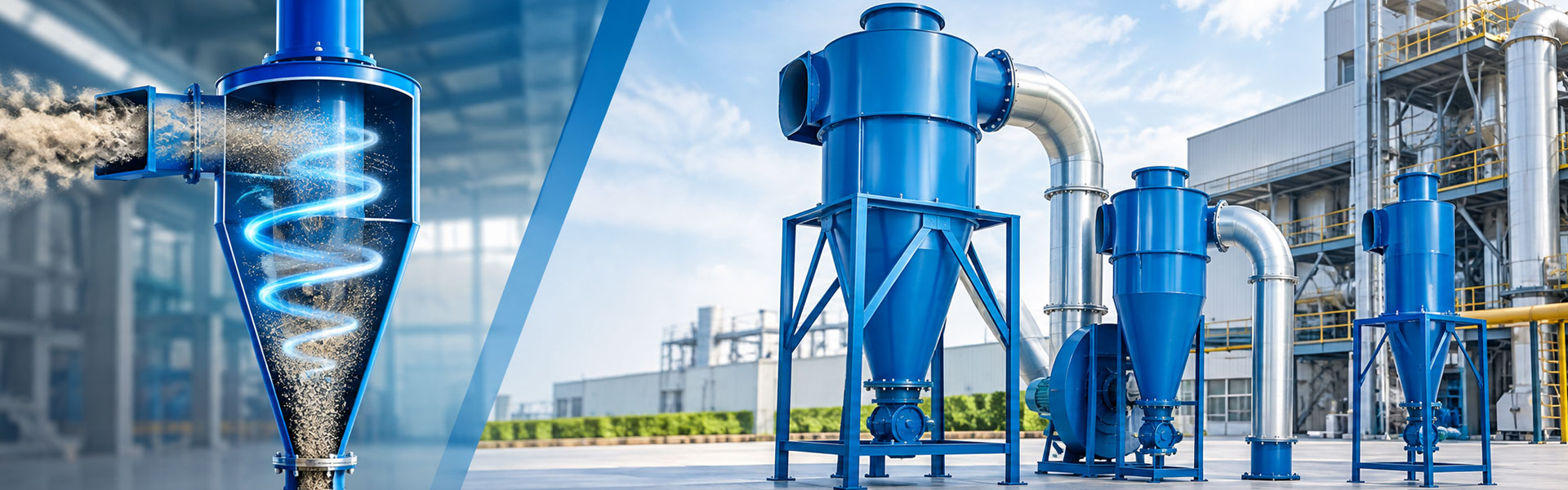
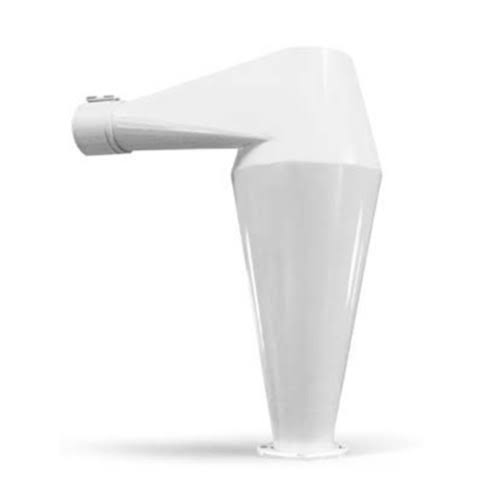
A Pneumatic Cyclone is a mechanical separation unit used in pneumatic conveying and industrial air-handling arrangements to separate solid particles from an air or gas stream. The Cyclone Separator creates a controlled vortex that drives particles toward the outer wall, allowing the separated material to move downward for collection while the relatively cleaner air leaves through the upper outlet.
Annovaa Industries Pvt. Ltd. is a Pneumatic Cyclone Manufacturer for industries across Kolkata, West Bengal, Jharkhand, Odisha, Assam and Chhattisgarh. The equipment can be designed around airflow volume, material loading, particle characteristics, pressure-drop requirements and the layout of the pneumatic conveying line.
Key Features of Cyclone Separator
- Tangential Air Entry:Introduces the air-material mixture into a rotating flow pattern.
- Vortex-Based Separation:Uses the movement of the air stream to separate particles without filter media.
- Coarse Particle Collection:Particularly useful for removing larger and heavier particles from an air stream.
- Continuous Material Discharge:Separated solids can be directed toward a hopper or downstream collection arrangement.
- No Internal Moving Mechanism:The basic cyclone body operates through airflow and geometry rather than rotating internal parts.
- Pneumatic Line Compatibility:Can be incorporated into positive- or negative-pressure conveying systems.
- Custom Fabrication:Body dimensions, inlet arrangement and discharge configuration can be selected according to the application.
How the Cyclone Separator Performs Separation
The material-laden air enters the cyclone through a tangential inlet and begins travelling in a downward spiral. Particles with greater inertia move toward the cyclone wall, where they lose momentum and travel downward through the conical section. The cleaner gas then reverses direction and moves upward through the central outlet. This makes cyclone separation particularly useful as a pre-separation stage before equipment such as bag filters when additional fine-particle filtration is required.
Engineering Parameters That Influence Performance
Cyclone performance is closely related to the relationship between airflow and separator geometry. Important design inputs include:
- Air or gas volume
- Inlet velocity
- Cyclone diameter
- Particle size distribution
- Particle density
- Solids concentration
- Required separation efficiency
- Permissible pressure drop
- Material temperature
- Dust discharge arrangement
The size of particles that can be effectively separated depends on factors including inlet velocity, solids concentration, particle-to-gas density difference and cyclone dimensions.
Construction & Component Arrangement
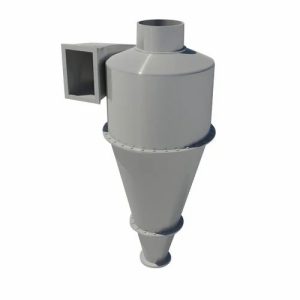
A typical Cyclone Separator consists of several interconnected sections:
Component | Purpose |
Tangential Inlet | Introduces the material-laden air stream |
Cylindrical Body | Establishes the primary rotating flow |
Conical Section | Guides separated particles toward the lower outlet |
Vortex Finder | Provides the central path for the upward gas flow |
Dust Outlet | Releases separated material |
Collection Hopper | Receives the discharged particles |
Outlet Duct | Carries the separated gas onward |
The construction material can be selected according to temperature, abrasion, corrosion and the characteristics of the material being conveyed.
Where Pneumatic Cyclones Are Used
- Flour & Grain Processing
Cyclone separators can be integrated with pneumatic conveying arrangements for handling suitable grain products and process dust.
- Cement Industries
They can serve as mechanical separation equipment for dust-laden air and bulk-material conveying applications.
- Chemical Processing
Suitable configurations can be used for separating compatible powders and particulate material from process air.
- Food Processing
Cyclone arrangements can support powder and granular-material handling where the selected construction and hygiene requirements are appropriate.
- Mining & Mineral Processing
Their robust mechanical design makes cyclones useful for selected applications involving abrasive particulate materials.
- Wood & Biomass Processing
Cyclone separators can be used for collecting compatible chips, dust and coarse particulate material from extraction systems.
- Pneumatic Conveying Plants
Cyclones are commonly used as gas-solid separation units for removing conveyed material from the carrying air stream.
Advantages of Using a Cyclone Separator
A properly sized cyclone can provide a straightforward method of separating relatively coarse particulate material from an air stream.
- Reduces the particulate load reaching downstream filtration equipment
- Supports recovery of usable coarse material
- Requires no filter bags or cartridges for the primary separation stage
- Can handle substantial dust loading in suitable applications
- Offers a comparatively simple mechanical arrangement
- Suitable for continuous industrial operation
- Can be connected with hoppers, rotary valves or other discharge equipment
A cyclone should not automatically be treated as a replacement for fine filtration; where very small particles or stringent outlet-emission requirements are involved, additional filtration may be necessary.
Why Choose Annovaa Industries Pvt. Ltd.?
Annovaa Industries Pvt. Ltd. approaches cyclone selection according to the actual conveying and separation conditions rather than relying on one fixed cyclone size.
For a new installation or replacement requirement, the following information can help determine the appropriate configuration:
- Required air volume
- Type of material being conveyed
- Approximate particle size
- Material loading in the air stream
- Operating temperature
- Available installation space
- Required discharge method
- Downstream filter or collection equipment
This information helps establish a cyclone arrangement that fits the existing pneumatic conveying system more effectively.
Pneumatic Cyclone Integration in Material Handling Systems
A Cyclone Separator can form one stage within a larger material-handling arrangement. A typical process may involve pneumatic conveying of the material into the cyclone, mechanical separation inside the cyclone, collection of solids at the lower outlet and transfer of the separated air toward a fan or secondary filtration unit. Where fine dust remains in the gas stream, the cyclone can operate ahead of a bag filter or other filtration system, reducing the particulate burden placed on the downstream filter.
Customer Queries
- What is a Pneumatic Cyclone?
It is a cyclone-based gas-solid separation device used to remove particulate material from an air or gas stream, particularly within pneumatic conveying and dust-handling systems. - What is the type of Pneumatic Cyclone offered here?
The specified type is a Cyclone Separator, designed for mechanical separation of particulate material from an air stream. - Can a Cyclone Separator handle fine dust?
Its effectiveness depends on particle size, density, airflow and cyclone geometry. Very fine particles may require an additional filtration stage. - Can the cyclone be connected to a pneumatic conveying system?
Yes. Cyclone receivers are commonly used for gas-solid separation in pneumatic conveying arrangements. - What information is required before selecting a cyclone?
Airflow, material type, particle characteristics, solids loading, temperature, available space and required separation performance are useful starting points.
Discuss Your Cyclone Separator Requirement with Annovaa Industries Pvt. Ltd.
For a Pneumatic Cyclone manufacturer in Kolkata, West Bengal, Jharkhand, Odisha, Assam or Chhattisgarh, Annovaa Industries Pvt. Ltd. can evaluate the separation requirement around your existing or proposed pneumatic conveying line. Share the airflow capacity, material being conveyed, approximate particle size, operating temperature and required discharge arrangement to determine the appropriate Cyclone Separator configuration for your application.